

The internet that we use every day is only a small part of the online world. Hidden beneath it is a place that many people have heard about but very few truly understand—the Dark Web.
For years, the Dark Web has been surrounded by mystery. Some call it a space for privacy and anonymous communication, while others associate it with hackers, cybercrime, and underground marketplaces. Because of these mixed opinions, it has become one of the most talked-about topics in cybersecurity.
Over time, several Dark Web platforms became legendary. Names like Silk Road, AlphaBay, Hansa Market, Dream Market, RaidForums, BreachForums, Dread, and Dark0de were known across the world and attracted thousands of users. Some operated like massive online communities, while others became symbols of the hidden side of the internet.
But none of them lasted forever. Security flaws, law enforcement operations, scams, and internal conflicts eventually brought many of these platforms to an end. Their rise and fall reshaped the conversation around online anonymity, cybersecurity, and digital trust.
So, what made these forums so famous? Why did millions of people know their names? And what lessons can we learn from their success and downfall? In this article, we’ll explore the stories behind the most legendary Dark Web forums and marketplaces in a simple and easy-to-understand way
The First Giant – Silk Road
Every empire has a starting point, and when people talk about the history of the Dark Web, one name almost always comes first “Silk Road“.
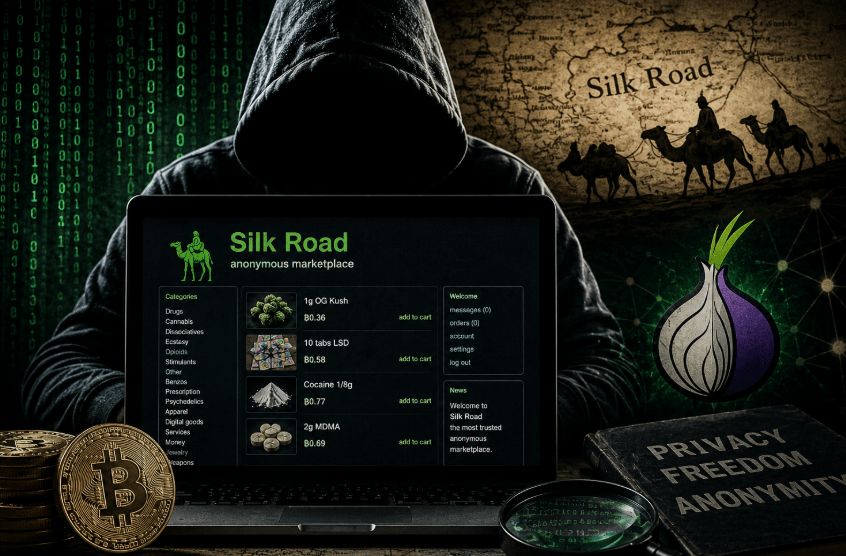
Before Silk Road was launched in 2011, the Dark Web was a relatively unknown corner of the internet. It was mainly used by technology enthusiasts, privacy advocates, researchers, and people interested in anonymous communication. Outside these circles, very few people had even heard the term “Dark Web.” It existed, but it was far from mainstream.
Everything changed with the arrival of Silk Road.
What made Silk Road revolutionary wasn’t simply that it attracted a large number of users—it completely changed how people viewed anonymous online platforms. For the first time, a marketplace combined anonymous browsing with cryptocurrency payments, creating an ecosystem that was unlike anything seen before on the internet.
One of the biggest reasons behind its rapid growth was Bitcoin. At that time, Bitcoin was still in its early days, and most people had little or no idea what cryptocurrency actually was. Banks and traditional payment systems dominated online transactions, while digital currencies were considered an experiment by many. Silk Road became one of the first major platforms to demonstrate how cryptocurrency could be used for transactions without relying on conventional financial institutions. As a result, it unintentionally pushed Bitcoin into global conversations.
Another feature that made Silk Road stand out was its trust and reputation system. Since users operated anonymously, trust could not be built through real identities. Instead, the platform allowed buyers and sellers to leave ratings and reviews after transactions, much like modern e-commerce websites such as Amazon or eBay. Sellers with positive feedback gained credibility, while those with poor reviews struggled to attract customers. This system created a surprising level of confidence among anonymous users and played a major role in the platform’s popularity.
As the platform grew, so did its reputation. What started as a relatively small marketplace soon became one of the most talked-about websites in internet history. Media organizations, governments, cybersecurity experts, and researchers across the world began paying attention to it. The Dark Web, once a niche topic, suddenly became part of mainstream discussions.
For cybersecurity researchers, Silk Road became much more than just a website—it became a case study. It showed how emerging technologies like encryption and cryptocurrency could combine to create entirely new online ecosystems. At the same time, it demonstrated an important lesson: anonymity can make activities harder to trace, but it does not guarantee complete safety or permanence.
The rise of Silk Road marked the beginning of a new chapter in the history of the internet. It inspired many other Dark Web marketplaces and forums that followed, but it also set the stage for the challenges, investigations, and eventual downfalls that would shape the Dark Web for years to come.
AlphaBay – The Empire That Became Bigger
When Silk Road disappeared, many people believed that it marked the end of large Dark Web marketplaces. Governments and law enforcement agencies had shown that even the biggest anonymous platforms could be taken down. For a moment, it seemed as if the era of massive Dark Web communities was over.
But the internet has a way of evolving.
Instead of disappearing, the Dark Web entered a new phase. New marketplaces began emerging, each trying to improve upon the weaknesses of its predecessors. Among all of them, one platform quickly rose above the rest “AlphaBay“.

Launched a few years after Silk Road, AlphaBay didn’t just copy the old model; it refined it. The platform offered a more organized interface, better user experience, and a wider variety of categories. People found it easier to navigate, and its growing reputation attracted users from around the world.
Another factor behind AlphaBay’s rapid success was timing. By then, cryptocurrency had become far more popular than it was during the Silk Road era. More people understood Bitcoin and other digital currencies, making it easier for users to participate in anonymous online transactions. At the same time, discussions about online privacy and digital anonymity were becoming increasingly common, bringing even more attention to platforms like AlphaBay.
As thousands of users joined, the marketplace expanded at an incredible pace. It grew into one of the largest Dark Web marketplaces ever created, with a massive global user base. Its influence became so significant that cybersecurity researchers, journalists, and law enforcement agencies across the world closely monitored its activities to understand how such digital ecosystems operated.
What made AlphaBay remarkable wasn’t just its popularity—it was its scale. It demonstrated how quickly an online platform can grow when there is strong demand and an active community. Every new user added value to the platform, attracting even more users in a self-reinforcing cycle.
This phenomenon is known as the network effect, and it is not unique to the Dark Web. Many of the world’s biggest digital platforms—from social media apps to online marketplaces—grow because their value increases as more people join. The larger the community becomes, the stronger its attraction for new members.
For business students and cybersecurity professionals, AlphaBay serves as an important case study in digital platform growth. It shows how technology, user experience, and network effects can rapidly create massive online ecosystems. At the same time, it reminds us that even the fastest-growing platforms can face serious challenges when they attract global attention.
AlphaBay ultimately became one of the most famous names in Dark Web history—not only because of its size, but because it proved that after the fall of one empire, an even bigger one could rise.
Hansa Market – The Marketplace Built on Trust
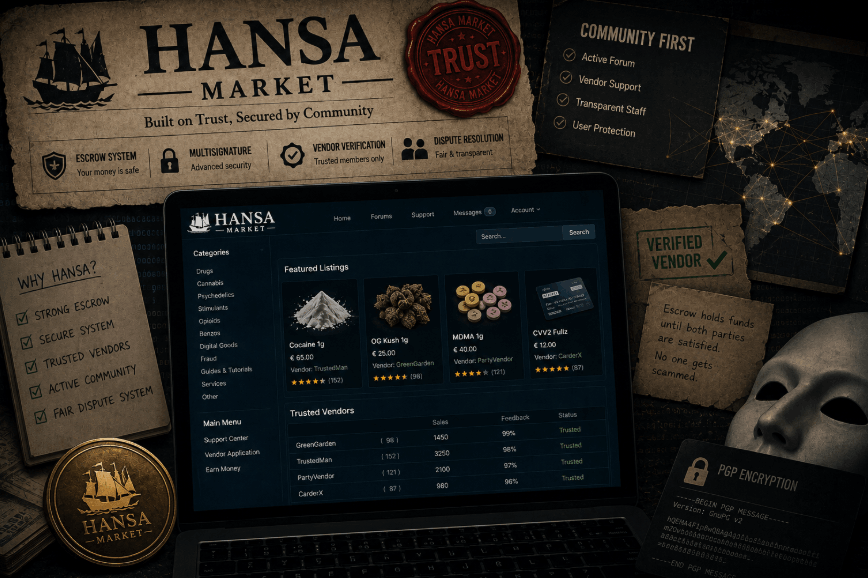
Most people believe that trust can only exist when you know who you’re dealing with. We trust friends because we know them, businesses because they have a brand, and websites because they have a reputation.
But Hansa Market challenged this idea.
On the Dark Web, users hide their real identities. They don’t use their real names, addresses, or personal information. In such an environment, many people would assume that building trust is nearly impossible. Surprisingly, Hansa showed that anonymous communities can still develop systems that encourage confidence and accountability.
The biggest challenge for any online platform is convincing users that they can safely interact with strangers. This challenge becomes even more difficult when everyone is anonymous. Without trust, no online marketplace or community can survive for long.
To solve this problem, Hansa relied on a reputation system. Users could rate their experiences, leave feedback, and review transactions. Over time, members who consistently behaved responsibly built a strong reputation, while those with poor feedback lost credibility. Instead of trusting a person’s real identity, the community trusted their history and behavior.
This idea may sound unusual, but it’s actually similar to how many modern internet platforms work today. When people shop on Amazon, book accommodation on Airbnb, order food, or hire freelancers online, they often make decisions based on ratings and reviews rather than personal relationships. A seller with thousands of positive reviews naturally appears more trustworthy than someone with no history at all.
Hansa demonstrated an important principle of the digital world: trust does not always come from knowing someone’s real name, it can also be built through consistent behavior, transparency, and community feedback. In many online ecosystems, reputation becomes a form of digital identity.
For cybersecurity researchers and technology experts, Hansa became an interesting case study. It showed how anonymous communities can create their own mechanisms of accountability and self-regulation, even when traditional methods of identity verification are absent.
The story of Hansa teaches a broader lesson that applies far beyond the Dark Web. Whether it’s an online marketplace, a social media platform, or a business community, long-term success depends on one thing above all else: earning and maintaining trust.
Dream Market – The Power of Stability
In the digital world, many platforms become popular almost overnight. They attract millions of users, dominate headlines, and seem unstoppable. But just as quickly as they rise, many of them disappear.
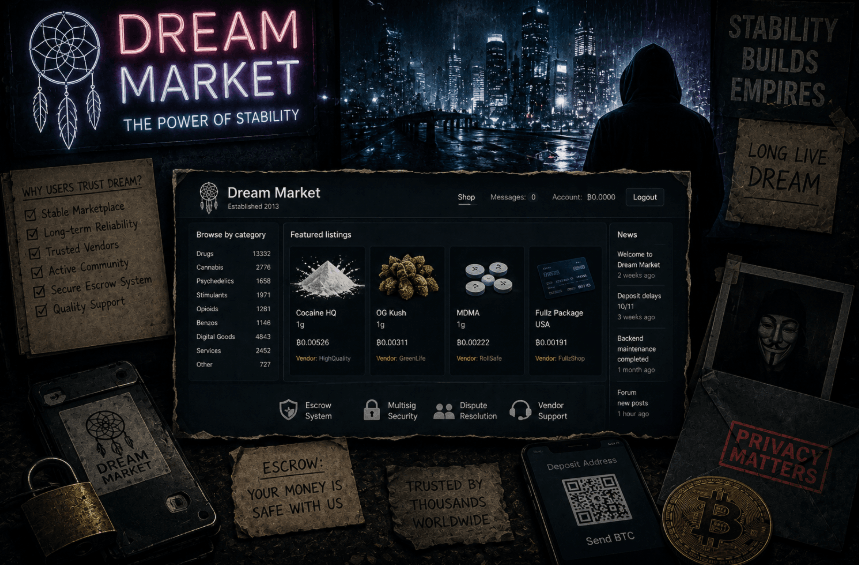
Dream Market followed a different path.
Instead of chasing rapid expansion at every opportunity, the platform became known for something much more valuable consistency. While other marketplaces appeared and vanished within short periods, Dream Market managed to remain active for years, earning a reputation for stability among its users.
This stability mattered more than many people realize.
Any online community depends on trust. Users are more likely to spend their time, effort, and resources on a platform if they believe it will still exist tomorrow. If a website constantly faces uncertainty or frequent disruptions, people eventually lose confidence and move elsewhere.
Dream Market benefited from this simple principle. Rather than being remembered only for its size, it became known for its ability to operate consistently over a long period. For many users, reliability itself became one of the platform’s strongest features.
Interestingly, this lesson extends far beyond the Dark Web.
Many of the world’s most successful companies didn’t become industry leaders simply because they grew fast. They earned customer loyalty by delivering consistent experiences year after year. Whether it’s an online marketplace, a technology company, or a global brand, people tend to trust organizations that demonstrate reliability over time.
In business, this creates a powerful cycle. Stability builds trust, trust creates loyalty, and loyalty fuels long-term growth. Companies that focus only on rapid expansion may gain attention, but those that consistently meet expectations often build stronger and more lasting communities.
For cybersecurity researchers and business analysts, Dream Market became an interesting example of how digital ecosystems survive. It showed that success is not always measured by how quickly a platform grows, but by how consistently it can maintain the confidence of its users.
RaidForums – The Forum That Changed Cybersecurity Discussions
When people think about the Dark Web, they often imagine large marketplaces where transactions take place. However, marketplaces were only one part of the ecosystem. The other equally important part was online forums—places where people came not to buy or sell, but to talk, share ideas, and exchange information.
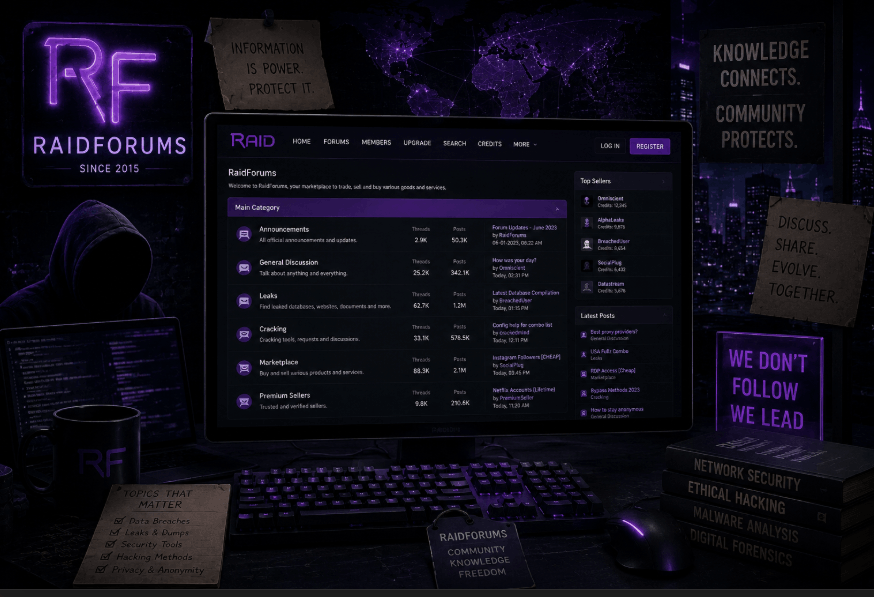
One of the most well-known examples of such a community was RaidForums.
Unlike marketplaces that focused on transactions, forums were built around discussions. Users could ask questions, share opinions, post resources, debate topics, and interact with thousands of other members. In many ways, these platforms functioned like social media communities or discussion boards, where information spread rapidly through conversations.
RaidForums gained worldwide attention because of its large and highly active user base. New discussions appeared constantly, and topics could reach thousands of readers within a very short time. As the community grew, it became a platform that cybersecurity researchers, journalists, and security analysts closely monitored to understand what conversations were emerging in the online world.
One of the biggest lessons from RaidForums was the speed at which information can travel. In the digital age, a single post or discussion can spread across communities within hours, influencing thousands of people before many organizations are even aware of it. The internet has dramatically reduced the time it takes for ideas, trends, and information to circulate.
This principle is not limited to the Dark Web. The same phenomenon can be seen on social media platforms, online communities, and public discussion forums around the world. A single viral post can shape opinions, start debates, or bring attention to an issue almost instantly.
For cybersecurity professionals, monitoring online discussions has become an important part of understanding emerging trends. Conversations within digital communities can sometimes provide early signals about new risks, changing techniques, or broader developments in the cybersecurity landscape. Rather than reacting after an issue becomes widespread, organizations often try to identify patterns and discussions as early as possible.
The story of RaidForums demonstrates that information itself can be one of the most powerful forces on the internet. Platforms built around discussion may not always have the visibility of large marketplaces, but they can significantly influence how knowledge spreads and how communities evolve.
Its legacy serves as a reminder that in today’s connected world, the speed of information can shape events just as much as the events themselves.
BreachForums – A New Generation of Communities
As older Dark Web forums disappeared, new communities quickly took their place. One of the most talked-about among them was BreachForums.
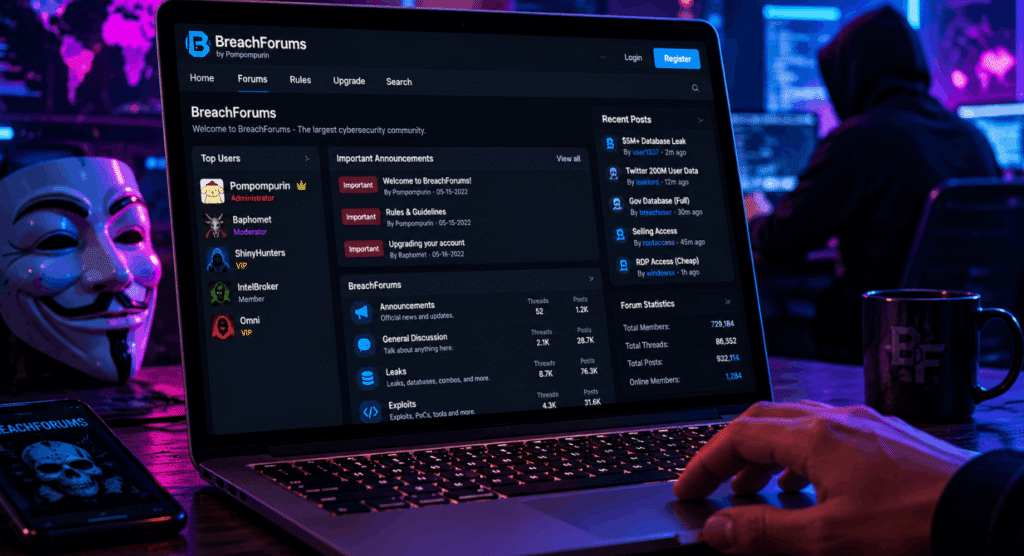
The platform gained attention because of its cybersecurity-related discussions and was closely followed by researchers and security analysts. They monitored these conversations to understand new trends and potential risks in the digital world.
What made BreachForums important was its timing. The cybersecurity industry was growing rapidly, and organizations were realizing that preventing attacks is often better than dealing with them later. This is where threat intelligence became important—the process of collecting information about possible cyber threats before they turn into major incidents.
The story of BreachForums teaches a simple lesson: staying informed is essential. In today’s fast-moving digital world, information spreads quickly, and risks can emerge at any time. Organizations that monitor trends and identify problems early are usually better prepared than those that react only after an incident becomes public.
In the end, BreachForums showed that in cybersecurity, knowledge and timely information can be just as valuable as technology itself.
Dread – The Reddit of the Dark Web
When people talk about Dark Web communities, one name often comes up “Dread“. It is commonly called the “Reddit of the Dark Web” because its structure is similar to Reddit, where users create posts, join discussions, and share information on different topics.
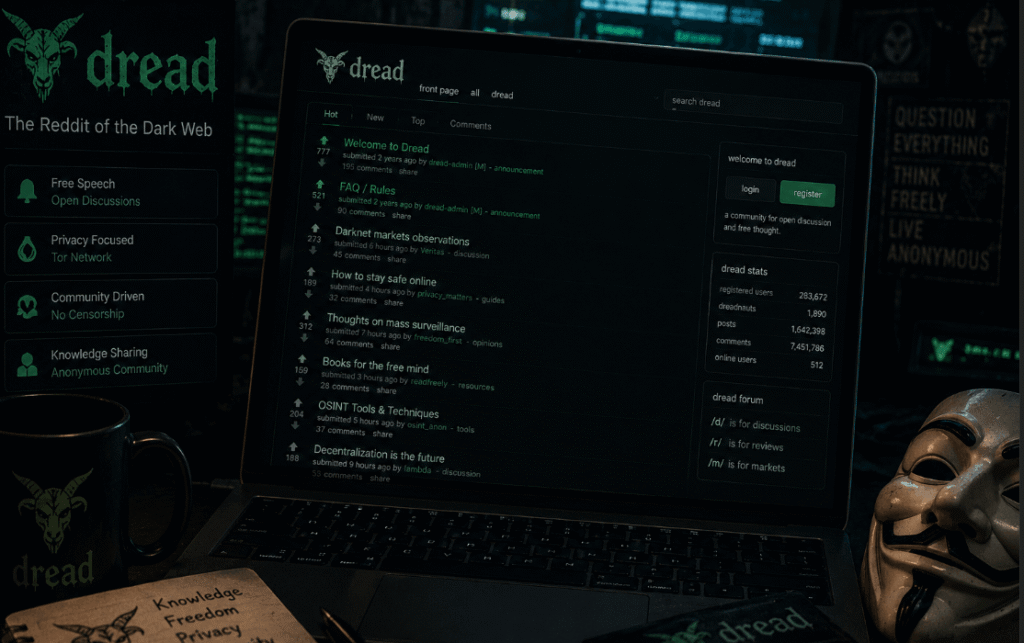
Unlike marketplaces that focus on buying and selling, Dread is mainly a discussion platform. Users exchange ideas, ask questions, share news, and talk about privacy, cybersecurity, and other topics. This community-based approach helped it become one of the most popular forums on the Dark Web.
One reason for Dread’s popularity is that people value information and communication just as much as transactions. A strong community keeps users engaged by allowing them to learn from others and stay updated on new developments.
The platform also highlights an important lesson for the modern internet: communities create value. Websites like Reddit, Discord, and other discussion forums grow because people share knowledge and help each other.
For cybersecurity researchers, Dread has been an important place to observe online trends and understand how digital communities evolve. Its story shows that on the internet, information and active communities can be just as powerful as technology itself.
Conclusion
The history of the Dark Web is about more than just anonymous websites—it is a story of technology, trust, and online communities. Platforms like Silk Road, AlphaBay, Hansa Market, Dream Market, RaidForums, BreachForums, Dread, and Dark0de became famous because they showed how quickly digital ecosystems can grow and change.
Although many of these platforms no longer exist, their impact is still studied by cybersecurity experts and researchers. They provide valuable lessons about privacy, reputation, and the importance of staying informed in the digital world.
The biggest takeaway is simple: technology will keep evolving, but the lessons from the past will continue to shape the future of the internet.